Language Connections delivers first-rate legal translation quickly. We use their interpreters for international training programs. These people are true professionals. We have found them to be extremely reliable and flexible.


As one of the most structurally complex and precise languages in the world, German translation requires careful attention. Effective German translation is dependent on understanding its grammar and syntax, appropriate levels of formality, and the context of the intended audience. For organizations operating in French-speaking markets or communicating with German-speaking audiences worldwide, ensuring the right register and terminology is essential to ensuring clear, natural, and culturally appropriate communication.
Language Connections combines subject-matter expertise with intelligently deployed technology to deliver expert German translations tailored to your needs. With 30+ years of experience, we match businesses, institutions, and government entities across industries with a qualified network of translators and appropriate technological tools to achieve international success. Our professional linguists and dedicated project managers ensure accurate, cost-effective German language solutions while keeping linguistic judgment and human expertise at the center of the process.
German translation requires careful attention to grammar, formality, and cultural context. From business documents to websites, marketing materials, and multimedia content, Language Connections' global network of professional linguists combines language expertise with subject-matter knowledge to support effective communications across German-speaking markets.
Document translation for contracts, financial statements, technical materials, and other business documents used in German-speaking markets. Our linguists consider terminology, register, formatting, and intended audience to produce translations that preserve the meaning and purpose of the original document.
Effective German marketing translation must preserve a brand's identity and persuasive message while accounting for cultural expectations and differences. Language Connections adapts advertising, campaigns, websites, product descriptions, social media content, and other marketing materials for German-speaking markets while maintaining the appropriate tone, terminology, and brand voice.
Technical German translation requires more than fluency in the language; it requires an understanding of the subject matter and the terminology used within a particular field. Language Connections supports the translation of technical, scientific, engineering, software, manufacturing, and other specialized materials by matching projects with linguists who have relevant industry expertise. This helps ensure that complex concepts, technical terms, and other critical information remain precise and consistent throughout the translation.
Legal translation requires exact terminology, consistency, and a thorough understanding of the legal context in which a document will be used. Language Connections provides German translation for contracts, regulatory materials, policies, and other legal content, with linguists selected for their relevant legal and German-language expertise.
Beyond document, marketing, and technical translation, we provide German language services for specialized content in fields such as government and education. Our German translations support policy and communications with precision. Additionally, our educational translation covers e-learning content and other materials to support German-speaking learners while preserving educational objectives, subject-specific terminology, and academic appropriateness.
Language Connections delivers first-rate legal translation quickly. We use their interpreters for international training programs. These people are true professionals. We have found them to be extremely reliable and flexible.

I want to thank you again for all of your help in making our program with Moscow State University a great success! Everything about the written and verbal translation went smoothly. It’s always a pleasure working with the team at Language Connections. We are very grateful for your support and look forward to working together again.

You guys do great work and we’re always appreciative of it so I’m happy to recommend you when asked.
These translations look great. You have done a great job making the Russian science jargon into understandable English sentences. It is also impressive that you managed to translate the last application with only a few days’ notice. Thank you for the high quality work!

Language Connections has translated many of our documents into various languages. They are cost-effective, on-time, and reliable.

Language Connections has provided us with a very good first impression and has not let us down! They worked on a seminar with a large number of participants, which demanded simultaneous translation of postings as quickly as possible and with great command of French. We were impressed by the quality of their work, flexibility to work long hours as needed to complete all translations on time, and their high level of computer savvy.

As one of the major global economic centers and consumer markets, Germany is a hub for international commerce and dealings. Language Connections translates financial reports, procurement documents, technical specifications, and corporate communications to help organizations navigate these German-speaking markets. Our linguists and localization specialists adapt content to regional language conventions, including differences in vocabulary, forms of address, levels of formality, and industry-specific terminology, helping your brand build trust, strengthen business relationships, and compete effectively across German-speaking markets.
Learn more on our Business service page.
Germany is home to a robust automotive and manufacturing industry. As companies and international partners collaborate and operate in this sector, accurate technical communication is essential to maintaining quality, operational efficiency, and safety. From engineering specifications and equipment manuals to software interfaces, organizations need translations that preserve specialized terminology while meeting the linguistic and professional expectations of German-speaking audiences. Language Connections combines subject-matter expertise and intelligently deployed translation technology to meet these needs, ensuring that projects are matched with linguists who have a deep understanding of German and its levels of context.
Learn more on our Technology service page.
Some of Europe's largest and most well-established pharmaceutical, biotechnology, and life sciences research organizations are located in Germany, making it an important market for companies operating within the global healthcare industry. From clinical trial protocols and informed consent forms to pharmaceutical labeling, medical device documentation, and patient-facing materials, every translation must preserve scientific accuracy, and communicate complex information clearly to its intended audience. Language Connections meets these needs by delivering specialized life sciences translation services. Our linguists not only possess expert command of German, but also have relevant scientific and medical expertise to navigate multilingual regulatory environments.
Learn more on our Life Sciences service page.
German translation plays an important role in international diplomacy, regional cooperation, security, and military affairs across Europe and the Americas. As a member of the EU, Germany engages with other EU bodies while overseeing its own administrative structure. Therefore, government agencies and public institutions require translations of policies, reports, administrative documents, and other public information materials. Language Connections supports cross-border and domestic communication by providing drawing on qualified linguists who can deliver high-precision translations.
Learn more on our Government service page.
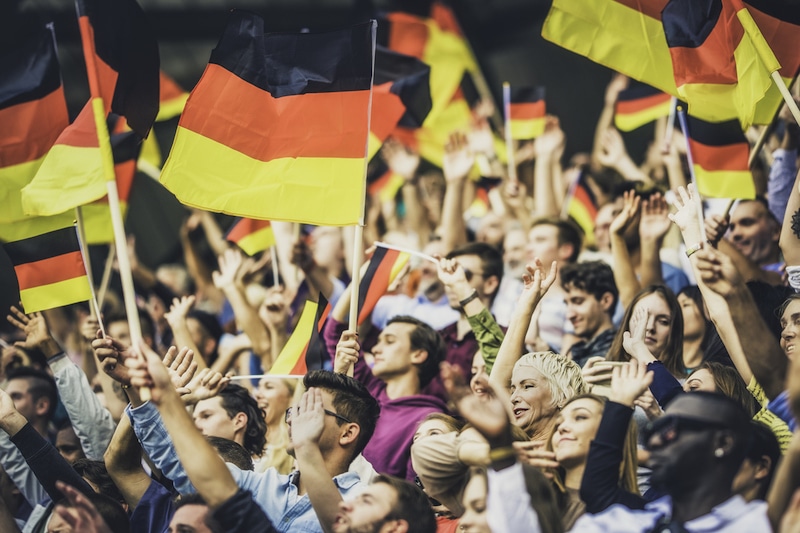
German is a West Germanic language spoken primarily in Germany, Austria, Switzerland, Liechtenstein, Luxembourg, and parts of Belgium and Italy. With approximately 130 million speakers worldwide, including native and second-language speakers, German is one of the most widely spoken languages in Europe and an important language for international business, science, engineering, and commerce.
German has several major regional varieties. Standard German (Hochdeutsch) serves as the primary written and formal communication standard, but vocabulary, spelling conventions, pronunciation, and everyday expressions vary across Germany, Austria, and Switzerland.
German uses the Latin alphabet, including three additional vowels (ä, ö, ü) and the character ß (Eszett). Its grammatical system includes four cases, three grammatical genders, and extensive noun compounding. German also distinguishes between formal and informal forms of address, making audience expectations and professional context important considerations when selecting language and tone.
With more than 30 years of translation experience and a global network of linguists, Language Connections helps organizations determine the appropriate linguistic approach for each project. We utilize linguists who are familiar with German and combine their expertise with state-of-the-art translation technology to maintain cultural relevance and precision.
German is fairly grammatically complex to translate. The language uses four grammatical cases (nominative, accusative, dative, and genitive) and three grammatical genders (masculine, feminine, and neuter). It also frequently places verbs at the end of subordinate clauses, while compound nouns combine several words into a single expression.
There are several variations of the German language across Germany, Austria, and Switzerland, which creates different national language standards in spelling, vocabulary, terminology, and everyday usage. For example, Swiss Standard German does not use the character ß, replacing it with ss, while Austrian German incorporates vocabulary that differs from standard usage in Germany. Switzerland also has a distinctive linguistic environment in which Swiss German dialects are spoken in everyday conversation, while Standard German is generally used in formal writing. German also distinguishes between formal and informal second-person address, particularly through Sie and du.
LC works with professional German linguists who understand these grammatical structures and can restructure sentences to preserve the original meaning while producing natural, readable translations. For technical, legal, and business materials, subject-matter expertise also helps ensure that complex terminology and relationships between concepts remain accurate.

Our linguist selection process considers relevant experience, familiarity with computer-assisted translation (CAT) tools and terminology resources, and the ability to meet project-specific quality requirements. Depending on the assignment, translations may undergo additional linguistic review and quality-control checks to support accuracy, consistency, and adherence to client specifications. We also account for confidentiality obligations and apply appropriate vetting procedures, including professional references where applicable, to help ensure that linguists are suited to the work entrusted to them.
For German projects, this approach is particularly important when navigating cultural contexts and maintaining the correct grammar. By aligning linguistic expertise with the subject matter, target audience, and technical requirements of each assignment, Language Connections helps organizations produce German translations that are accurate, culturally appropriate, and fit for their intended purpose.
1. Project Analysis
Your dedicated project manager reviews the source files, project scope, language requirements, and intended audience. For German translation projects, this may include identifying the audience and distinguishing which German standard to use. The team establishes the project scope, terminology resources, Translation Memory (TM), budget, and timeline upfront, helping ensure that linguistic, cultural, and technical requirements are addressed before translation begins.
2. Production
Once the project is scoped, professional German translators with relevant subject matter expertise translate the source materials using Computer-Assisted Translation (CAT) tools and approved terminology resources. Depending on the intended audience and content, translators consider German terminology, tone, regional conventions, and cultural context while preserving the meaning and purpose of the original. Editors then review the translation for accuracy, clarity, terminology, and consistency, while proofreaders check the completed files for linguistic and formatting issues. This multi-stage review helps ensure that the final translation is appropriate for its intended audience and use.
3. Post-Production
After translation and editing, our project manager conducts a final review of the completed files to check language, formatting, terminology, consistency, and adherence to project requirements. For German projects, this may include checking font compatibility and character rendering as well as ensuring that layouts, punctuation, and text spacing display correctly across digital platforms and document formats. The finalized files are then prepared for client review, and relevant terminology, Translation Memory, and other project resources are maintained to support consistency across future projects and content updates.
4. Client Review & TM Update
When client review is part of the workflow, translated files are shared with the appropriate reviewers to confirm that terminology, tone, and style align with the intended audience and any established guidelines. Our project manager and linguists review feedback and incorporate approved revisions into the final files. Relevant terminology and approved translations can then be added to the project's Translation Memory and glossary, helping maintain consistency across future German translation projects and recurring content while reducing the need to translate previously approved material again.
For content where precision is non-negotiable, our professional linguists work within industry-leading Computer-Assisted Translation (CAT) tools. The source text is displayed segment by segment alongside a space for the translator to enter the target language, giving the linguist full control while technology supports consistency.
Translation Memory (TM) technology stores your previously approved translations. When a new document contains matching or similar segments, those are automatically recalled, accelerating delivery and reducing your costs without sacrificing accuracy — making the process increasingly cost-effective the longer we work together.
We offer our clients a web-based project management system, XTRF™, that makes working with Language Connections simple and efficient. Thanks to its intuitive, user-friendly interface, learning the system doesn’t take long. Clients can securely log into the system, submit translation requests and files online, and track the status of their ongoing projects. Project managers can simultaneously handle several complex multilingual projects, while adhering to stringent quality assurance protocols.
Language Connections leverages machine translation (MT) pre-translation through an AI-powered platform. We select the most effective MT engine for your specific language pair, industry, and content type using expert linguists so we can spend less time fixing errors without sacrificing quality, combining the speed of AI with professional human judgment.
For internal communications or projects that prioritize a quick turnaround and cost efficiency, machine translation is applied. Content production is then followed by automated quality checks that flag errors and inconsistencies; no full human post-editing is included.
We translate a wide range of German materials, including:
Our linguists are matched to projects based on their language expertise, professional experience, and subject-matter knowledge, helping ensure that each translation meets the linguistic and technical requirements of its intended uses.
Although Germany, Austria, and Switzerland share Standard German as a written language standard, each country has developed distinct vocabulary, spelling conventions, and expressions. For example, Swiss Standard German replaces the letter ß with ss, while Austrian German incorporates country-specific terminology, particularly in areas such as food, government, and everyday communication. Swiss German dialects also differ considerably from Standard German and are widely used in spoken communication. Language Connections considers the intended audience and regional conventions when assigning German translation projects, helping ensure that translated materials reflect the appropriate vocabulary, spelling, and cultural expectations for each market.
German distinguishes between formal and informal forms of address, primarily through Sie and du. The appropriate choice depends on the intended audience, communication channel, industry, and relationship between the organization and its readers. Formal German is generally preferred for legal correspondence, corporate communications, financial documentation, and professional settings, while informal language may be more appropriate for social media, consumer marketing, and brands targeting younger audiences. Language Connections considers tone, register, and audience expectations when translating German content to help organizations maintain a consistent brand voice and communicate appropriately with their target markets.
Yes. German capitalizes all nouns, uses decimal commas rather than decimal points in numerical values, and different quotation mark styles. German also generally uses the day-month-year format for dates. Additionally, German translations may be longer than their English source texts, particularly when technical terminology or compound nouns are involved. Language Connections reviews punctuation, character encoding, spacing, and formatting to ensure that translated documents and digital content display correctly.
The cost of German translation depends on several factors, including the volume of content, subject matter, language direction, turnaround time, formatting requirements, and the level of review required. Specialized materials, such as legal contracts, medical documentation and technical manuals, may require linguists with specific subject-matter expertise. Language Connections evaluates each project individually to provide a quote based on your content, requirements, and deadlines.
AI and machine translation can support certain German translation workflows, particularly for high-volume content, internal communications, and materials where speed is a priority. However, German grammar can make automated translation challenging. Language Connections uses translation technology where appropriate to support efficiency and consistency, with qualified linguists providing the contextual judgment, subject-matter expertise, and review needed to meet each project's quality requirements. The appropriate balance of automation and human review depends on the content's purpose, sensitivity, and intended audience.
We accept virtually all file formats, including:
You do not need to convert your files to plain text before sending them to us.
Our intake process is simple and streamlined:
Three decades of trusted language localization services across regulated and commercial industries.
Professional translation and interpreting services covering the world's most widely spoken languages.
A carefully selected global network of experienced linguists with verified subject-matter expertise.
Language Connections, founded in 1993, is a Boston-based language services provider and certified Massachusetts State Contractor. We deliver professional language solutions to government agencies, healthcare organizations, educational institutions, legal professionals, and businesses across the United States, spanning document translation, interpretation, localization, multilingual desktop publishing, transcription, and multilingual marketing support.

Language Connections Inc.
22 Goddard Circle,
Brookline, MA 02445
Phone: +1-617-731-3510
Email: service@languageconnections.com